
Knee Pain 1–2 years after a total knee replacement can be unexpected. especially after going through a major surgery intended to restore long-term comfort and mobility. While most patients enjoy significant improvement after total knee replacement (TKR), a portion of individuals begin to notice new discomfort, stiffness, or swelling months or even years later. This raises an important question: Is this normal, or is something wrong with my knee implant?
At Cherry Medical, our pain specialists understand how frustrating and worrying this experience can be. Post-TKR pain can stem from a wide range of factors, from routine healing changes and muscle imbalance to implant issues or overlooked medical conditions. The key is knowing which symptoms are part of the normal recovery process and which ones require closer medical evaluation.
Relieve your Knee Replacement Pain. call Cherry Medical today at (714) 819-0000 for expert care!
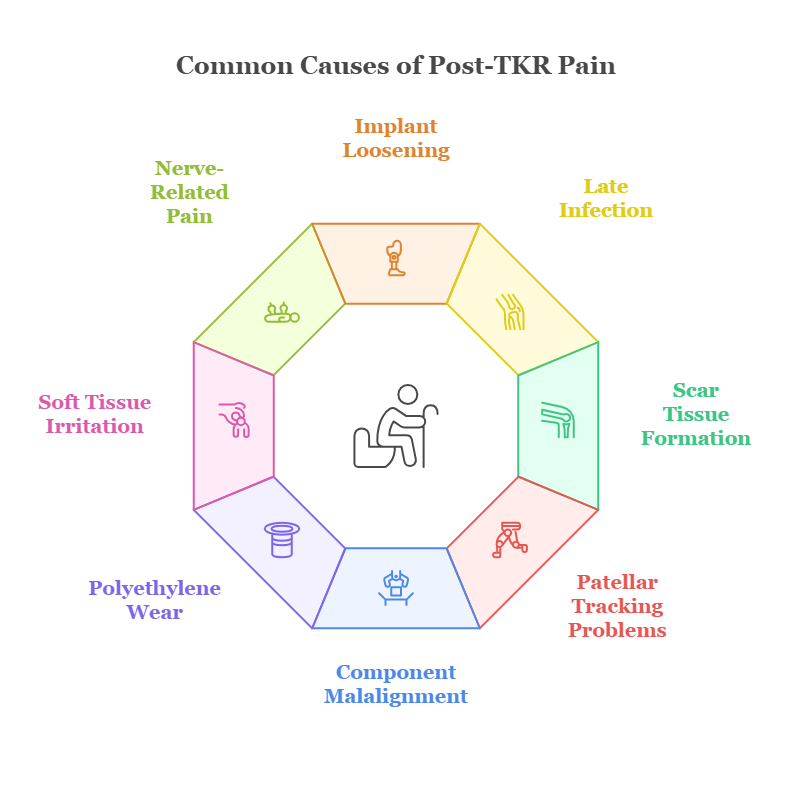
What Causes Pain Years After Knee Replacement
Even after a successful total knee replacement (TKR), some patients experience knee pain 1–2 years post-surgery. While mild occasional discomfort may be part of normal recovery, persistent or worsening pain often signals an underlying issue that requires evaluation. Understanding the common causes helps patients and physicians identify the problem early and plan effective management.
- Implant Loosening (Aseptic Loosening)
Over time, the prosthetic components may gradually detach from the bone, causing deep aching pain, a feeling of instability, and discomfort when standing or walking.
- Late Periprosthetic Joint Infection
Some infections develop months or years after surgery. Even low-grade infections can cause chronic pain, swelling, stiffness, or night-time discomfort.
- Scar Tissue Formation (Arthrofibrosis)
Excessive scar tissue around the joint can limit range of motion, leading to stiffness, tightness, and difficulty bending or straightening the knee.
- Patellar Tracking Problems
If the kneecap does not glide smoothly over the prosthesis, it can result in anterior knee pain, clicking, catching, or grinding sensations during movement.
- Component Malalignment
Improper positioning of prosthetic components may create uneven pressure distribution, leading to persistent pain, instability, and changes in gait.
- Polyethylene Wear
The plastic spacer between metal components can wear down, occasionally earlier than expected, causing irritation, swelling, or mechanical symptoms like clicking or catching.
- Soft Tissue Irritation
Tendons, ligaments, or surrounding soft tissues may become inflamed or irritated, resulting in localized pain that often worsens with activity.
- Nerve-Related Pain
Surgical trauma or neuroma formation can irritate nerves near the joint, causing burning, shooting, or tingling pain, sometimes accompanied by numbness.
Risk Factors for Persistent Knee Pain After TKR
Several factors can increase the likelihood of ongoing knee pain 1–2 years after total knee replacement. Understanding these risks helps patients and specialists at Cherry Medical plan appropriate management and prevent long-term complications. Additionally, early identification of these risk factors allows for targeted interventions, better pain control, improved mobility, and long-term joint health.
Common risk factors include:
- Patient-related factors: Older age, obesity, pre-existing arthritis in other joints, or chronic medical conditions.
- Surgical factors: Improper implant positioning, inadequate soft tissue balancing, or surgical complications.
- Postoperative factors: Delayed rehabilitation, limited physical activity, or poor adherence to physiotherapy.
- Neurological or pain sensitivity factors: Nerve damage during surgery or heightened pain perception.
How Knee Pain 1–2 Years After Replacement is Diagnosed and Treated
Knee pain 1–2 years after total knee replacement can have several causes. Early and accurate diagnosis is essential to guide effective treatment and prevent long-term complications. The table below summarizes the key diagnostic methods and treatment options to help patients understand and manage post-TKR knee pain.
Diagnosis and Treatments Methods / Options Purpose / Benefits Physical Examination Inspection, palpation, range of motion, stability tests Evaluates swelling, tenderness, stiffness, alignment, and knee stability; first step in identifying potential problems. Standard X-ray Imaging Anteroposterior (AP), lateral, and skyline views Detects implant loosening, misalignment, fractures, or bone changes around the prosthesis; fast and widely available. Advanced Imaging CT scan, MRI with metal-safe sequences Provides detailed visualization of soft tissues, scar tissue, ligaments, tendons, and subtle component positioning issues. Laboratory Testing ESR (Erythrocyte Sedimentation Rate), CRP (C-Reactive Protein), Complete Blood Count Detects inflammation or infection; guides further management if periprosthetic joint infection is suspected. Joint Aspiration (Arthrocentesis) Synovial fluid analysis for cell count, culture, and crystals Confirms or rules out infection; helps guide antibiotic therapy and treatment planning. Physical Therapy / Rehabilitation Strengthening exercises, stretching, range-of-motion exercises, gait training Improves joint stability, reduces pain, restores flexibility, prevents stiffness, and enhances long-term function. Medications / Pain Management NSAIDs, analgesics, anti-inflammatory medications Reduces mild to moderate pain and inflammation; used alongside therapy to improve mobility. Targeted Injections Corticosteroid injections, local anesthetic injections Provides localized relief from inflammation or pain in soft tissues; helps with temporary symptom control and diagnosis. Minimally Invasive Surgical Procedures Arthroscopic scar tissue removal (Arthrolysis), synovectomy Removes adhesions, scar tissue, or inflamed tissue that limits movement and causes pain. Revision Knee Replacement Surgery Full or partial revision TKR Corrects implant loosening, malalignment, or wear; restores knee stability, alignment, and function. Infection Management IV or oral antibiotics, surgical debridement Treats confirmed infections to prevent prosthesis failure and chronic pain; ensures long-term joint health. Lifestyle and Supportive Measures Weight management, low-impact exercises, assistive devices Reduces mechanical stress on the knee, improves overall recovery, and enhances surgical outcomes.
Cherry Medical Neurology & Pain Management for Knee Pain
Persistent or worsening knee pain 1–2 years after total knee replacement may indicate underlying issues such as implant problems, soft tissue irritation, or nerve-related discomfort. At Cherry Medical, our neurology and pain management specialists evaluate each patient individually to identify the cause of pain and provide personalized treatment plans. Early consultation ensures accurate diagnosis, effective pain relief, and long-term joint health.
You should seek expert care if you experience:
- Chronic or increasing knee pain
- Swelling, redness, or warmth around the joint
- Limited range of motion or stiffness
- Numbness, tingling, or shooting pain
Dr. Alireza Bozorgi is a board-certified neurologist and pain management specialist with over 20 years of clinical and research experience. He has completed multiple fellowships and residencies in neurology and pain management, holds active medical licensure in California, and has published numerous peer-reviewed research papers.
For full details on Dr. Bozorgi’s education, certifications, work experience, and publications, view his complete CV here.
Exercises 1 Year After Knee Replacement
One year after a total knee replacement, maintaining strength, flexibility, and joint stability is crucial for long-term mobility and pain reduction. Recommended exercises include low-impact aerobic activities such as walking, cycling, or swimming to improve cardiovascular fitness and promote joint mobility; strengthening exercises targeting the quadriceps, hamstrings, and hip muscles to enhance knee stability; range-of-motion exercises involving gentle stretching and bending to maintain flexibility and prevent stiffness; balance and proprioception training to improve coordination, reduce the risk of falls, and support safe daily movement; and functional training like step-ups, sit-to-stand exercises, and controlled squats to reinforce everyday activities. Performing these exercises consistently under the guidance of a physiotherapist or pain management specialist at Cherry Medical ensures optimal recovery, enhances knee function, and minimizes the risk of chronic pain or reinjury.
Pain 2 years after knee replacement
Experiencing knee pain 2 years after a total knee replacement can be concerning for patients who expected long-term relief. While some mild discomfort may persist due to normal tissue adaptation or age-related changes, persistent or worsening pain often signals an underlying issue that requires evaluation by Cherry Medical’s neurology and pain management specialists.
Common causes include nerve irritation, soft tissue inflammation, implant-related issues, or biomechanical changes. Persistent pain at this stage can affect mobility, daily activities, and overall quality of life. Early assessment is crucial to determine whether non-surgical interventions, targeted pain management, or physical therapy can alleviate symptoms, or if further medical investigation is needed. Patients should monitor symptoms such as chronic pain, swelling, redness, stiffness, or tingling/numbness and consult specialists promptly to ensure proper care and long-term joint health.

Neurology Tests Explained: What Patients Should Know Before Their Appointment at Cherry Medical
FAQs about Knee Pain 1–2 Years After Knee Replacement
Knee pain 1–2 years after knee replacement is common and can stem from various causes. Find answers to the most frequently asked questions about knee pain after knee replacement. Learn about causes, recovery, exercises, and when to seek expert care. For expert consultation and more information, Contact Us at Cherry Medical.
What is a normal recovery timeline one year after TKR?
Most patients have improved mobility, reduced pain, and increased strength, though some mild stiffness or occasional discomfort may remain.
Is swelling normal 2 years after TKR?
Persistent swelling is not typical and may indicate chronic inflammation, tissue irritation, or infection.
What complications can occur 3 or more years after knee replacement?
Possible complications: implant loosening, wear, malalignment, scar tissue, or chronic soft tissue inflammation.
What causes knee pain 5 years after total knee replacement?
Pain may come from implant wear, loosening, scar tissue, or degenerative changes in surrounding joints. Early assessment ensures proper management.
Why does my knee still feel unstable years after knee replacement?
Instability may be caused by implant loosening, ligament imbalance, or muscle weakness. Evaluation by specialists is recommended.
Is it normal to feel the prosthesis inside the knee?
Yes, mild awareness of the implant can be normal, but pain or clicking may indicate an issue.
When does implant loosening or wear usually occur?
Loosening or wear can appear anywhere from 2 to 15 years after surgery, depending on activity, implant type, and healing.
Is allergy to implant materials a possible cause of late knee pain or swelling?
Rarely, metal or cement allergies can cause pain, swelling, or skin reactions around the knee.
Can problems in other parts of the leg cause knee pain years after TKR?
Yes, hip, ankle, or spine issues can refer pain to the knee. A full musculoskeletal assessment is recommended.
Are non-surgical treatments effective for long-term post-TKR pain?
Yes, physical therapy, targeted exercises, pain management injections, and neuromodulation can reduce pain and improve function in most patients.
How can I book an appointment at Cherry Medical?
You can easily book an appointment with Dr. Alireza Bozorgi at Cherry Medical by:
- Calling us: (714) 819-0000
- Online booking:
- visit our website, “www.cherrymedical.org“ and fill out the appointment request form
- book online in the scheduling website at “http://www.patientfusion.com/doctor/alireza-bozorgi-30060“
- send us an email at “ask@cherrymedical.org“