
A stellate ganglion block (SGB) is a medical procedure used to block or numb a collection of nerves called the stellate ganglion, located in the neck.
If you’re struggling with chronic pain or anxiety, Stellate Ganglion Block (SGB) may offer long-lasting relief by calming the body’s stress response.A stellate ganglion block (SGB) is a medical procedure that blocks or numbs a collection of nerves called the stellate ganglion, located in the neck. These nerves are part of the sympathetic nervous system, which helps regulate involuntary functions such as blood flow, heart rate, and sweating. Think of it as a post station responsible for sending signals to some territories in your body. The block is performed by injecting a local anesthetic around the stellate ganglion to interrupt nerve signals.
In the body, there are other nerve relay stations, such as the sympathetic ganglia, which serve similar roles in transmitting nerve signals. Dysfunction or abnormal activity in these ganglia can lead to chronic pain and neurological issues. Specialist doctors at Cherry Medical can help patients manage pain by temporarily blocking nerve activity.
Relieve chronic pain and improve circulation with SGB at Cherry Medical—call (714) 819-0000 today.
The stellate ganglion, part of the sympathetic nervous system, is located near the sixth and seventh cervical vertebrae (C6–C7) in the neck. It functions as a relay center for sending nerve signals to the head, neck, chest, and arms. When this system becomes overactive or dysregulated, it can lead to chronic pain or other health issues.

SGB is performed for various pain and vascular disorders, as well as for certain psychiatric conditions:
Chronic pain conditions such as Complex Regional Pain Syndrome (CRPS), peripheral neuropathy, persistent pain in the arm, hand, or face, and post-herpetic neuralgia (pain following shingles) can significantly impact daily life. Stellate Ganglion Block (SGB) has been shown to provide effective relief by targeting the sympathetic nervous system and reducing nerve-related pain.
Stellate Ganglion Block (SGB) can effectively improve blood circulation in vascular conditions. In patients with Raynaud’s disease, it reduces painful vasospasms, while in cases of frostbite, it promotes tissue recovery by enhancing blood flow to the affected areas.
Stellate Ganglion Block (SGB) has shown promising results in the treatment of Post-Traumatic Stress Disorder (PTSD). By calming the overactive sympathetic nervous system, SGB can help reduce common PTSD symptoms such as anxiety, intrusive flashbacks, and sleep disturbances, improving overall quality of life.
A condition caused by shingles that affects nerves in the face or neck can be alleviated by SGB. Your doctor typically uses an ultrasound, which is a more accurate and safer option compared to a live X-ray, to guide the needle to the correct spot. You can watch a Video about this procedure.

The Stellate Ganglion Block (SGB) is a minimally invasive procedure that targets the sympathetic nerves in the neck. It can provide pain relief, improve blood circulation, and reduce anxiety or PTSD symptoms, while some temporary and manageable side effects may occur. The table below presents a comprehensive overview of the benefits, possible risks, and potential complications of SGB:
| Benefits | Advantages of Stellate Ganglion Block (SGB) | Possible Risks and Side Effects |
|---|---|---|
| Reduces chronic pain | Helps treat Complex Regional Pain Syndrome (CRPS) and peripheral neuropathy | Temporary drooping of the eyelid or small pupil (Horner’s syndrome) |
| Improves blood circulation | Increases blood flow in conditions like Raynaud’s disease and frostbite | Hoarseness or temporary voice changes |
| Controls anxiety and PTSD symptoms | Reduces symptoms of Post-Traumatic Stress Disorder (PTSD), including anxiety and flashbacks | Dizziness or temporary weakness |
| Enhances sleep quality | Improves sleep quality and overall relaxation | Bruising, minor pain, or swelling at the injection site |
| Minimally invasive and fast | Can be performed in a clinic setting as an outpatient procedure | Infection at the injection site (rare) |
| Balances autonomic nervous system | Reduces overactive sympathetic nervous system activity and restores neural balance | Allergic reaction to local anesthetic (rare) |
Stellate Ganglion Block (SGB) is a minimally invasive procedure typically performed by a pain management or anesthesiology specialist at Cherry Medical Clinic, often on an outpatient basis. This step-by-step approach ensures a safe, effective, and precise procedure, helping reduce chronic pain, improve blood flow, and manage symptoms of PTSD.
The procedure is carried out in the following steps:
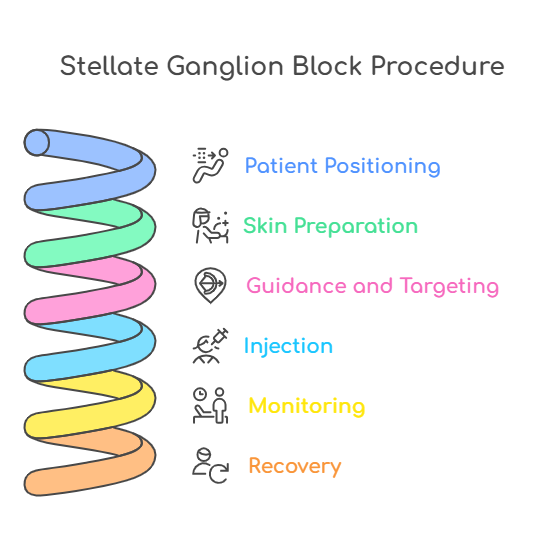
After receiving a Stellate Ganglion Block (SGB) at Cherry Medical Clinic, patients are usually monitored for 30–60 minutes to ensure safety and prevent potential complications. During this time, you may notice temporary numbness, hoarseness, or a warm sensation on one side of your face. It is recommended to avoid driving or strenuous activities for several hours and gradually return to your normal daily routine. Depending on your condition, your doctor may suggest a series of injections over several weeks to achieve the best possible results.
Always consult your physician before deciding to undergo a Stellate Ganglion Block (SGB), as this procedure may not be suitable for individuals with the following conditions:
Cherry Medical offers pain management and neurological treatment Services to help patients relieve chronic pain and nerve-related conditions.
The frequently asked questions below provide comprehensive and practical information about Stellate Ganglion Block (SGB). If you are considering this procedure or need specialized consultation and guidance, you can Contact Us at Cherry Medical Clinic.
It is generally safely done by an experienced physician; some uncommon but potential risks include:
It varies. If we see some improvements after the first injection, we usually recommend doing 2-6 blocks in a row with a few weeks in between.
Aspirin should be held for 6 days and Eliquis (Apixiban) for 3 days. Warfarin (Coumadin) must be stopped for 5 days and until INR is less than 1.3. All of these can be started the day after the procedure.
Yes, SGB can also reduce anxiety symptoms in individuals without PTSD. Studies have shown significant reductions in anxiety scores.
Yes, SGB can reduce anxiety by calming overactive sympathetic nerves and the body’s “fight-or-flight” response.
Ultrasound guidance allows the physician to accurately locate the stellate ganglion and surrounding structures, improving the safety and effectiveness of the injection while minimizing the risk of complications.
Most patients experience relief from anxiety within 30 minutes to 2 weeks after the procedure.
Yes, SGB can help some patients with Postural Orthostatic Tachycardia Syndrome (POTS) by temporarily blocking overactive sympathetic nerves in the neck. This may reduce symptoms such as rapid heart rate, dizziness, and anxiety, improving overall autonomic balance.
Consultation with a physician is essential to ensure the procedure is appropriate for your specific condition.
You can easily book an appointment with Dr. Alireza Bozorgi at Cherry Medical by:
To book an appointment and receive a consultation, please call us or fill out the form. We will contact you as soon as possible.