
A trigger point injection (TPI) is a medical procedure used to treat painful areas of muscle that contain trigger points, which are tight knots of muscle fibers that form when muscles do not relax properly. These trigger points can cause pain and discomfort, sometimes radiating pain to other areas of the body (referred pain). TPIs are used to alleviate muscle pain, reduce inflammation, and improve range of motion. These injections are highly effective. Some patients experience long-lasting relief, while others may require repeated treatments to manage chronic pain conditions. Struggling with chronic muscle pain? Trigger Point Injections (TPI) at Cherry Medical provide fast, targeted relief so you can move freely again.
Call Cherry Medical at (714) 819-0000 today for expert Trigger Point Injection treatment and fast relief from muscle pain!
Trigger points are commonly associated with conditions such as:

TPIs at Cherry Medical are carried out by expert neurologists, assisted by a skilled care team, ensuring a safe and precise treatment experience. The procedure generally follows these steps:
Local anesthetics provide fast pain relief for hours to days, while adding corticosteroids can extend relief for weeks to months. Depending on your condition, injections may be repeated every 2–4 weeks for optimal results. Studies show that over 70–80% of patients with chronic muscle pain experience significant relief after a few Trigger Point Injection sessions.
In the table below, you can review and compare all the benefits and risks of Trigger Point Injections (TPI):
| Benefits and Risk of Trigger Point Injection | Details |
|---|---|
| Benefits of Trigger Point Injection (TPI) | Immediate Pain Relief: Local anesthetics provide rapid reduction in muscle pain. |
| Reduced Chronic Pain: Effective for myofascial pain syndrome, fibromyalgia, and tension headaches. | |
| Improved Mobility & Flexibility: Release of trigger points restores normal muscle function. | |
| Targeted Treatment: Focuses directly on painful muscle knots rather than general pain medication. | |
| Minimally Invasive & Non-Surgical: Quick procedure with minimal downtime. | |
| Can Be Combined with Other Therapies: Often used alongside physical therapy or medications. | |
| Risks of Trigger Point Injection (TPI) | Mild Soreness or Bruising: Common at the injection site; usually resolves within 1–2 days. |
| Temporary Pain Increase: Rarely, pain may worsen briefly after injection. | |
| Allergic Reactions: Rare, mainly to local anesthetics or corticosteroids. | |
| Infection Risk: Very low when sterile techniques are used. | |
| Nerve Injury or Bleeding: Extremely rare, especially with ultrasound guidance. |
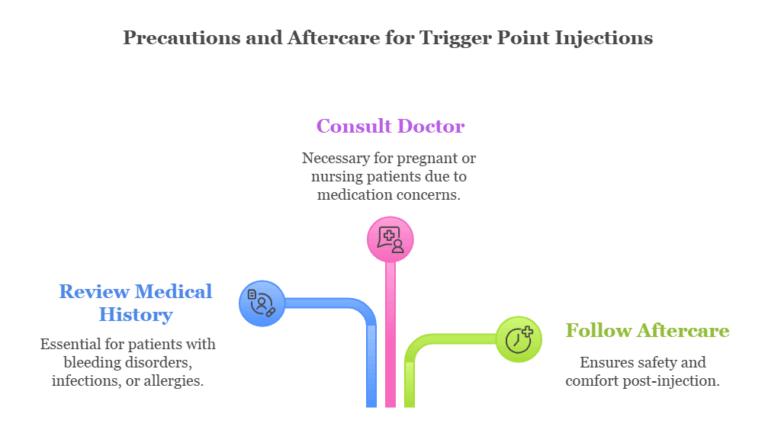
Before undergoing a Trigger Point Injection at Cherry Medical, it is essential to review your medical history with a specialized physician. Patients with bleeding disorders, active infections, or other serious medical conditions should consult their doctor prior to the procedure. Pregnant or nursing patients should also seek medical advice, as some medications used in the injection may not be recommended. For chronic conditions, multiple injections may be required to achieve long-term relief.
After the injection, light activity is recommended for about 24 hours, and strenuous exercise should be avoided immediately. Following these guidelines ensures a safe and effective treatment experience with the expert physicians at Cherry Medical.
At Cherry Medical, we offer transparent and competitive pricing for TPI to help patients manage chronic muscle pain safely and effectively. The cost of each injection varies depending on the number of trigger points treated, the use of ultrasound guidance for greater precision, and your individualized treatment plan. On average, injections range from $150 to $400 per session. Many insurance plans, including private providers, often cover TPI when medically necessary, reducing your out-of-pocket expenses. We provide transparent, affordable pricing to ensure access to effective care, and you will receive all the specialized care you need for effective treatment.
At Cherry Medical, our specialists use advanced techniques and ultrasound guidance to ensure safe, precise, and effective treatment. We provide personalized care plans tailored to each patient’s pain pattern and medical history, helping you achieve long-lasting pain relief and improved quality of life. Don’t miss the chance to experience fast, effective relief from muscle pain with Trigger Point Injections (TPI)—book your consultation today!
All treatment Services provided at Cherry Medical, with the support of specialized physicians, are designed to help manage and treat neurological conditions.

The following frequently asked questions can help you make an informed decision about Trigger Point Injections (TPI) and provide valuable information on the topic. For specialized consultation and more details, Contact Us at Cherry Medical.
Common side effects include mild soreness, bruising, or temporary pain increase at the injection site. Serious complications are very rare.
Corticosteroids like triamcinolone or methylprednisolone are commonly used to reduce inflammation in the affected muscle.
Local anesthetics (lidocaine, bupivacaine) and corticosteroids are commonly used. Sometimes saline is used for flushing or dry needling is performed.
Avoid strenuous exercise, heavy lifting, or intense physical activity for at least 24 hours. Mild activity is usually allowed.
The number varies based on your condition, but typically a few injections per muscle area are safe. Your physician will create a plan based on your needs.
Yes, most insurance plans cover trigger point injections. However, coverage may vary, especially if injections are done too frequently. It’s advisable to check with your insurance provider beforehand.
Search for pain clinics, neurologists, or physical medicine specialists in your area. Cherry Medical provides TPI services in the U.S., especially in Orange County.
You can easily book an appointment with Dr. Alireza Bozorgi at Cherry Medical by:
To book an appointment and receive a consultation, please call us or fill out the form. We will contact you as soon as possible.